


Why Gen Z Might Become the Most Emotionally Intelligent Investors Yet
Every generation brings a new relationship with money. Some inherit caution, some chase opportunity, some react to scarcity, and some rebel against tradition. Gen Z is different in a quieter but more powerful way. They are growing up in a world that talks openly about emotions, burnout, boundaries, and mental health—and that may fundamentally change how they invest.
For earlier generations, investing was often framed as a test of toughness. You were expected to ignore fear, suppress doubt, and stay “strong” when markets moved. Emotions were seen as weaknesses to overcome. The result? Many investors learned to hide their anxiety rather than manage it, leading to impulsive decisions during stress and overconfidence during good times.
Gen Z doesn’t approach emotions the same way. They don’t believe feelings are something to suppress. They believe emotions are signals to understand. This shift matters more for investing than it appears at first glance.
Markets don’t punish lack of intelligence as much as they punish emotional reactions. Panic selling, chasing trends, overconfidence, and constant switching are rarely caused by a lack of information. They’re caused by unmanaged emotions. A generation that is more comfortable acknowledging fear, stress, and uncertainty may be better equipped to address market behaviour.
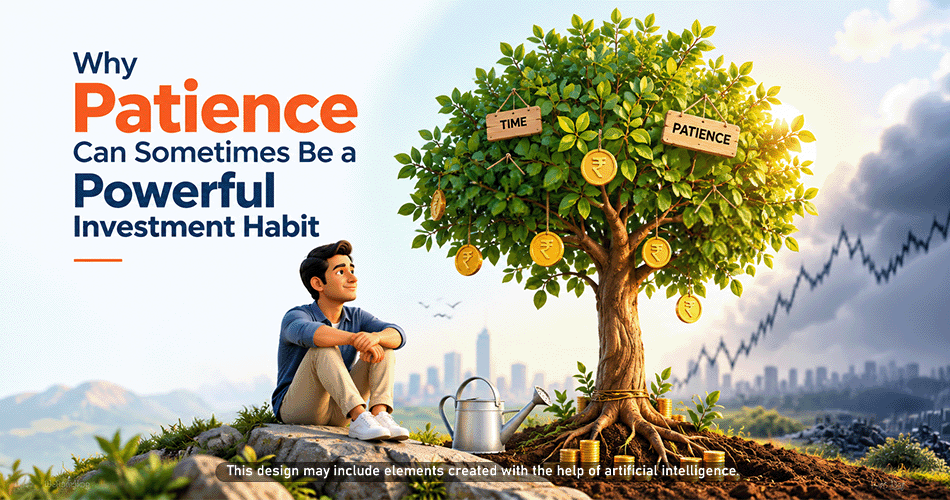
Gen Z has grown up watching volatility as the norm rather than the exception. Global crises, rapid technological change, social shifts, and economic uncertainty are not interruptions to their worldview—they are the backdrop. As a result, uncertainty feels familiar rather than threatening. This familiarity can translate into patience when investing, provided the system supports it.
Another defining trait of Gen Z is their openness to automation. Unlike earlier generations who equated control with constant involvement, Gen Z is comfortable delegating repetitive tasks to systems. They use automation to reduce mental load, not increase it. This mindset aligns naturally with long-term investing.
Automation removes daily emotional friction. You don’t need to decide whether to invest every month. You don’t need to react to headlines. The decision is made once, calmly, and executed repeatedly. For a generation that values mental clarity, this is not laziness—it’s intentional design.
Gen Z also questions hustle culture more openly. While ambitious, they are increasingly aware of burnout and its long-term cost. They are less impressed by constant intensity and more interested in sustainability. This makes them more receptive to investment approaches that reward consistency rather than aggression.
Mutual funds fit well into this emotional framework. They are not about predicting markets or pursuing short-term gains. They are about participation, patience, and structure. They allow investors to stay invested without needing to constantly engage emotionally.
Some traits that may make Gen Z emotionally stronger investors include:
These traits reduce behaviour-driven mistakes, which are often the biggest threat to returns.
Another reason Gen Z may excel emotionally is their resistance to traditional financial posturing. They are less likely to equate investing skill with bravado. Instead of pretending confidence, they are more willing to ask questions, admit confusion, and seek simple solutions. This humility is a hidden advantage.
Earlier generations often entered markets through individual stocks, tips, or peer influence, equating activity with intelligence. Gen Z is more comfortable starting with broad, structured approaches. They don’t see simplicity as weakness. They see it as efficiency.
There is also a strong alignment between Gen Z’s values and long-term investing. They think in terms of impact, sustainability, and future consequences. While these ideas often show up in social choices, they also influence financial behaviour. Long-term investing requires believing that the future is worth planning for—and Gen Z does.
They are also more aware of mental energy as a limited resource. Constantly monitoring markets, reacting to volatility, and second-guessing decisions is draining. Gen Z prefers systems that work quietly in the background, freeing attention for life, work, and personal growth.
Mutual funds, especially through systematic investing, offer that quiet progress. They don’t demand emotional engagement every day. They don’t require bravado during bull markets or emotional numbness during corrections. They simply keep going.
When investing aligns with emotional intelligence, a few shifts tend to happen:
This doesn’t eliminate mistakes, but it reduces their frequency and impact.
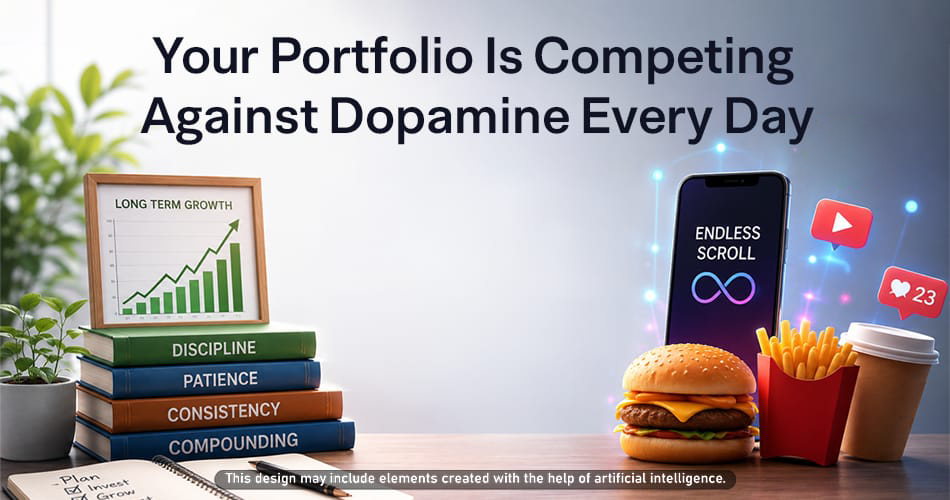
Of course, Gen Z is not immune to challenges. Social media noise, comparison culture, and rapid information cycles can amplify anxiety. But awareness is the first line of defence. A generation that recognises emotional triggers is better positioned to design systems that neutralise them.
That’s where mutual funds play a deeper role than just returns. They act as emotional buffers. They limit decision points. They create distance between feelings and actions. For emotionally aware investors, this is not a constraint—it’s protection.
It’s also worth noting that emotional intelligence doesn’t mean avoiding risk. It means understanding it. Gen Z is not necessarily more conservative; they are more intentional. They are more likely to ask, “Can I live with this outcome?” rather than “How fast can this grow?”
That question alone changes investing behaviour dramatically.
The future of investing will likely reward those who manage emotions better than those who chase information faster. In that sense, Gen Z is entering the market with a quiet advantage. They are not trying to outsmart the market emotionally. They are trying to coexist with it.
Mutual funds fit naturally into this coexistence. They allow Gen Z to participate in growth without turning investing into a source of stress or identity pressure. They support long-term thinking without demanding emotional suppression.
Every generation invests in the tools and mindset of its time. Gen Z values mental health, balance, and sustainability. Those values may finally align with what investing has always required—but rarely encouraged—emotional intelligence.
If that alignment holds, Gen Z may not just be savvy investors.
They may be the calmest ones yet.
This content is for investor education only. This blog should not be treated as investment advice or a recommendation. Mutual Fund investments are subject to market risks. Read all scheme-related documents carefully
Suite 428-429, Spazedge Tower B,
Sector 47, Sohna Road,
Gurgaon 122001
+91 99105 32255
Disclaimer | Commission Disclosure | Privacy Policy | Terms & Conditions | SID/SAI/KIM | Code of Conduct
Welcome To MySIPGuru © 2023


.png)
.png)
Risk Factors – Investments in Mutual Funds are subject to Market Risks. Read all scheme-related documents carefully before investing. Mutual Fund Schemes do not assure or guarantee any returns. Past performances of any Mutual Fund Scheme may or may not be sustained in the future. There is no guarantee that the investment objective of any suggested scheme shall be achieved. All existing and prospective investors are advised to check and evaluate the Exit loads and other cost structures (TER) applicable at the time of making the investment before finalizing any investment decision for Mutual Funds schemes. We deal in Regular Plans only for Mutual Fund Schemes and earn a Trailing Commission on client investments. Disclosure of commission earnings is made to clients at the time of investments.
AMFI Registered Mutual Fund Distributor | ARN- 121064 | Date of initial Registration: 01-04-2017 | Current validity: 22-03-2029
Grievance Officer: Sachin Gupta | Sachin.sipguru@gmail.com | +91 99105 32255